Table of Contents
Introduction
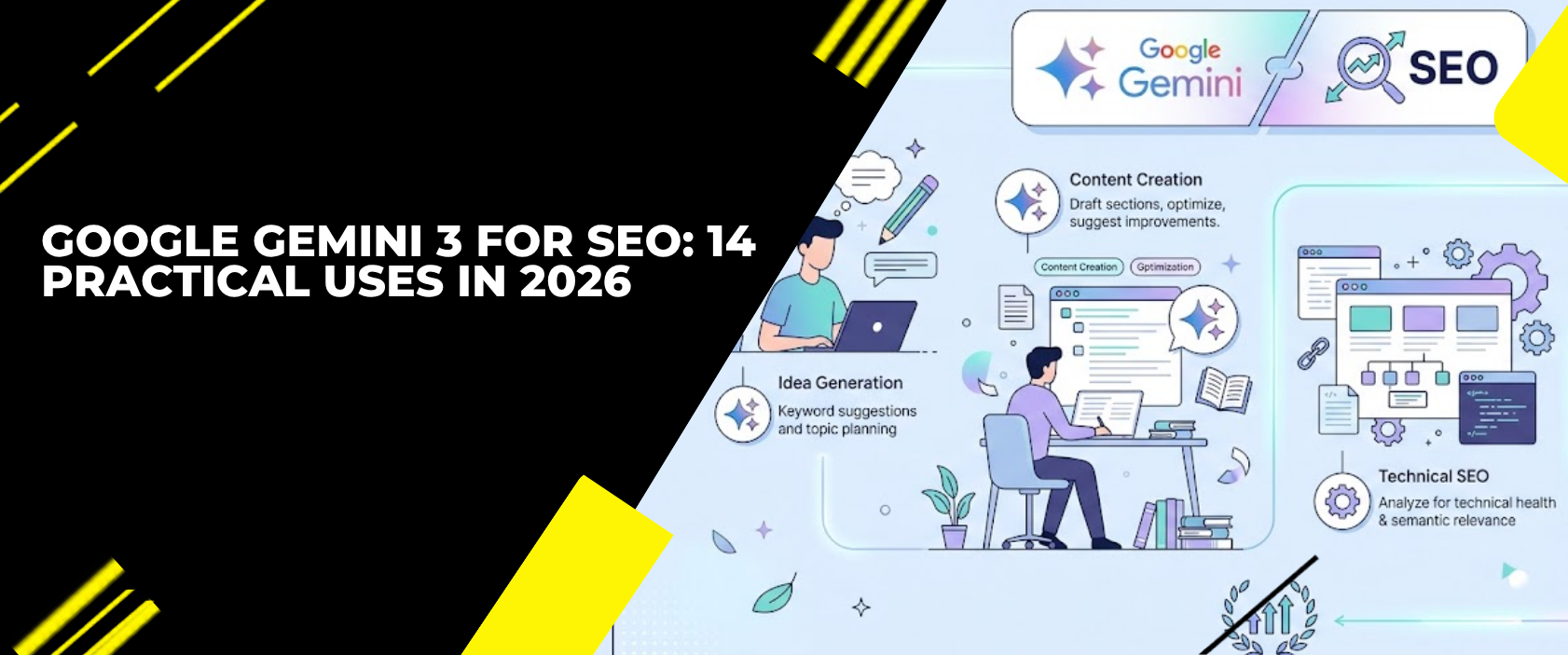
SEO isn’t just about ranking on Google anymore. Today, people discover information through Google Search, AI Overviews, ChatGPT, Gemini, Perplexity, and other AI-powered search engines. Users expect direct, accurate answers instead of scrolling through multiple websites. As a result, SEO professionals need to optimize content not only for search engines but also for AI-driven search experiences. This shift has made Google Gemini 3 for SEO much more than another AI chatbot. It’s becoming a practical assistant for planning content, understanding search intent, organizing research, improving existing pages, and building smarter SEO workflows.
But here’s what most articles get wrong.
They simply list Gemini’s features or provide a collection of prompts without explaining how experienced SEO professionals actually use the tool. Knowing what Gemini can do is one thing. Knowing when, why, and how to use it effectively is what delivers better SEO results.
In this guide, you’ll discover 21 practical ways to use Google Gemini 3 for SEO, learn where it adds real value, understand its limitations, and see how it fits into a modern SEO workflow. Whether you’re a beginner or an experienced marketer, these strategies will help you save time while creating more helpful, search-focused content.
Why Google Gemini 3 Matters for Modern SEO
SEO has changed dramatically over the last few years. Search engines no longer rely only on keywords. They evaluate search intent, entities, topical authority, content quality, and user satisfaction to determine which pages deserve visibility. At the same time, Google AI Overviews have changed how people consume information. Many users now get answers directly from AI-generated summaries without clicking multiple search results. This means your content needs to be structured in a way that’s easy for both people and AI systems to understand. That’s where Google Gemini 3 for SEO becomes valuable. Instead of spending hours organizing keywords, comparing competitors, or planning content, marketers can use Gemini to complete repetitive research tasks much faster. It can identify patterns, summarize large amounts of information, uncover content gaps, and help build a more efficient SEO workflow.
For example, imagine you’re planning a new content cluster around Technical SEO. Instead of manually reviewing 30 competing articles, you can ask Gemini to identify common topics, compare search intent, highlight missing entities, and recommend opportunities for information gain. What once took several hours can now be completed in minutes. The biggest advantage isn’t automation, it’s having more time to focus on strategy, creativity, and solving problems that AI can’t.
Before You Use Gemini for SEO: What It Can (and Can’t) Do
One of the biggest mistakes marketers make is expecting AI to replace SEO expertise. It can’t.
Google Gemini is a powerful research and productivity tool, but it doesn’t replace professional judgment or dedicated SEO platforms.
Gemini works exceptionally well for:
- Keyword clustering
- Search intent analysis
- Content briefs
- Topical maps
- Semantic keyword discovery
- Entity research
- FAQ generation
- Content optimization
- Prompt engineering
- Readability improvements
Gemini is not designed for:
- Search volume data
- Keyword difficulty
- Live SERP tracking
- Backlink analysis
- Technical website crawls
- Indexing issues
- Crawl diagnostics
- Google Search Console reporting
For those tasks, you’ll still need tools like Google Search Console, Google Analytics, Ahrefs, Semrush, and Screaming Frog.
Think of Gemini as a highly capable research assistant. It helps you organize information, uncover opportunities, and speed up decision-making but the final SEO strategy should always be backed by real data and human expertise.
14 Practical Uses of Google Gemini 3 for SEO
1. Cluster Thousands of Keywords by Search Intent
Keyword research doesn’t end after exporting data from Ahrefs or Google Search Console but the real challenge is organizing hundreds or even thousands of keywords into meaningful content opportunities. This is where Google Gemini for keyword research can save hours of manual work. Instead of grouping keywords alphabetically or by similar wording, Gemini can cluster them based on search intent. It identifies whether users are looking to learn, compare, buy, or solve a specific problem.
For example, these keywords may appear different but serve the same audience:
- Google Gemini SEO
- how to use Google Gemini for SEO
- Google Gemini SEO strategy
- Google Gemini SEO prompts
Rather than treating them as separate articles, Gemini can recommend building a comprehensive pillar page supported by focused subtopics.
Why it matters
Google increasingly rewards websites that demonstrate topical authority instead of publishing isolated articles around individual keywords.
Prompt
Act as an Enterprise SEO Strategist. Group these keywords by informational, commercial, navigational, and transactional intent. Recommend pillar pages, supporting articles, and internal linking opportunities.
2. Understand Search Intent Before Writing
Many pages fail because they answer the wrong question not because they’re poorly written. Someone searching “Google Gemini 3 for SEO” isn’t looking for a product announcement. They want practical ways to use Gemini to improve their SEO workflow.
Before writing, ask Gemini to analyze the query and identify:
- The user’s primary goal
- Related questions
- Expected content format
- Important entities
- Information competitors may have missed
This simple step helps you create content that aligns with what users actually expect to find.
Pro Tip
Always optimize for search intent first. Keywords should support the content not control it.
3. Build Topical Authority Instead of Publishing Random Blogs
Publishing four unrelated blog posts every month won’t establish your website as an authority. Successful SEO strategies focus on building connected content around a single topic. Gemini can help create a logical topical map that links supporting articles back to a comprehensive pillar page.
For example:
Pillar Topic:
Google Gemini 3 for SEO
Supporting Topics
- Google Gemini for Keyword Research
- Google Gemini Content Optimization
- Google Gemini SEO Prompts
- Google Gemini vs ChatGPT for SEO
- AI Overviews Optimization
- Prompt Engineering for SEO
- Semantic SEO with Google AI Tools
Each article strengthens the others through internal linking and deeper topical coverage. Over time, this improves both topical authority and your chances of earning visibility in AI-powered search.
4. Create Better SEO Content Briefs in Minutes
Great content starts long before the first paragraph. Instead of asking Gemini to “write a blog,” use it to create a complete content brief.
A strong brief should include:
- Search intent
- Target audience
- Semantic keywords
- Entities
- Competitor gaps
- Suggested headings
- Frequently asked questions
- Internal linking ideas
- Information gain opportunities
The result isn’t another AI-generated article. It’s a clear roadmap that helps writers produce more useful, accurate, and well-structured content.
5. Find Missing Entities Your Competitors Missed
Many marketers still optimize around keywords alone but modern SEO goes much further. Search engines understand relationships between entities, making them an important part of Google Gemini content optimization.
If you’re writing about Google Gemini 3 for SEO, relevant entities could include:
- Google AI
- AI Overviews
- Google Search Console
- Google Analytics
- Prompt Engineering
- Semantic SEO
- Knowledge Graph
- EEAT
- AI Search
- SERP Optimization
Gemini can quickly identify these relationships, helping you create richer content without forcing additional keywords.
6. Generate FAQs That Match Real User Questions
Many FAQ sections repeat questions nobody actually asks.
Instead of creating generic FAQs like “What is SEO?”, ask Gemini to generate follow-up questions based on user behavior and search intent.
For example:
- Can Google Gemini replace Ahrefs?
- Is Google Gemini accurate for SEO?
- Which SEO tasks should never be automated?
- Does Google Gemini help with AI Overviews?
- What’s the best Google Gemini SEO strategy for beginners?
These conversational questions improve user experience while making your content more relevant for voice search, AI search, and Google AI Overviews.
Prompt
Generate FAQs based on real follow-up questions users would naturally ask after reading this article. Focus on search intent, AI search, and information gain.
7. Refresh Existing Content Instead of Always Creating New Articles
Publishing new content is important, but updating existing pages often delivers faster SEO wins. Many blogs lose rankings because they’re outdated, missing recent developments, or no longer match search intent. Instead of rewriting everything manually, upload the article to Gemini and ask it to review the content.
It can identify:
- Outdated information
- Missing entities
- Weak sections
- New user questions
- Content gaps
- Opportunities for information gain
For example, if your 2024 SEO guide doesn’t mention AI Overviews or Google Gemini, Gemini can highlight exactly where those updates belong.
Prompt
Review this article as an Enterprise SEO Consultant. Identify outdated sections, missing entities, search intent gaps, and opportunities to improve information gain without changing the overall structure.
8. Discover Semantic Keywords Naturally
Keyword stuffing hasn’t worked for years. Google understands topics through relationships between concepts, not by counting how many times a keyword appears. This is where Google Gemini content optimization becomes extremely useful. Instead of asking for more keywords, ask Gemini to identify related concepts readers expect to see.
For a topic like Google Gemini 3 for SEO, it may recommend naturally including:
- AI Search
- Entity SEO
- Prompt Engineering
- Topical Authority
- Knowledge Graph
- Search Intent
- AI Automation
- Content Optimization
- SERP Optimization
- Google AI Tools
Adding these concepts makes your content more comprehensive without making it repetitive.
Why it matters
Semantic coverage helps search engines understand your expertise and increases your chances of ranking for related searches.
9. Identify Content Gaps Before Your Competitors Do
Most marketers compare articles by word count but experienced SEOs compare them by value.
Upload the top-ranking pages for your target keyword and ask Gemini questions like:
- Which questions remain unanswered?
- What examples are missing?
- Which audience pain points are ignored?
- Where does every competitor sound the same?
- How can this article provide more information gain?
Instead of copying competitors, you’ll find opportunities to create something genuinely better. That’s exactly what Google wants to reward.
10. Build a Smarter Internal Linking Strategy
Internal links help search engines understand how your content connects. They also help users discover related resources, increasing engagement and reducing bounce rates. Instead of manually reviewing dozens of pages, provide Gemini with your blog URLs and ask it to organize them into topical clusters.
It can recommend:
- Pillar pages
- Supporting articles
- Contextual anchor text
- Missing internal links
- New content opportunities
Pro Tip
Always review the recommendations yourself.
The best internal links support the user’s journey not just keyword relevance.
11. Write Better Meta Titles and Meta Descriptions
A page ranking on Google doesn’t guarantee clicks but your title and meta description are often the deciding factors. Instead of asking Gemini to “write an SEO title,” explain the goal.
For example:
Write five meta titles under 60 characters that increase curiosity while matching informational search intent. Avoid clickbait.
You’ll usually get much stronger results. The same applies to meta descriptions.
Focus on communicating value instead of stuffing keywords.
12. Simplify Technical SEO for Clients and Beginners
Technical SEO can be intimidating. Explaining concepts clearly is just as important as understanding them.
Gemini can simplify topics like:
- Canonical Tags
- XML Sitemaps
- Robots.txt
- Crawl Budget
- Core Web Vitals
- Redirects
- Indexing
For example, instead of giving a textbook definition of canonical tags, Gemini can explain them using simple analogies that clients or beginners immediately understand. This makes it an excellent assistant for creating educational content and training materials.
13. Optimize Content for Google AI Overviews
Ranking first is no longer the only goal. If Google displays an AI Overview, users may get their answer before clicking any website. To improve your chances of being referenced, structure content so it’s easy for AI systems to extract.
Gemini can help you create:
- Direct answer blocks
- Clear summaries
- Concise definitions
- Logical heading structures
- Question-and-answer sections
Instead of writing long introductions, answer the question first and provide supporting details afterward. That’s exactly how many AI-powered search engines process information.
Prompt
Rewrite this section to maximize its chances of appearing in Google AI Overviews. Begin with a direct answer, followed by supporting context and relevant entities.
14. Improve Prompt Engineering for Better SEO Results
Many people believe AI produces average content but in reality, average prompts produce average results. Prompt engineering is one of the most valuable SEO skills in 2026.
Compare these two prompts:
❌ Weak Prompt
Write a blog about Google Gemini.
✅ Strong Prompt
Act as an Enterprise SEO Strategist. Create a detailed content brief targeting informational search intent. Include semantic keywords, entities, EEAT recommendations, internal linking opportunities, competitor gaps, AI Overview optimization, and information gain.
The difference in output quality is enormous. The better your prompts, the less time you’ll spend editing. Think of prompt engineering as giving clear instructions to a highly capable assistant. The clearer your instructions, the better your results.
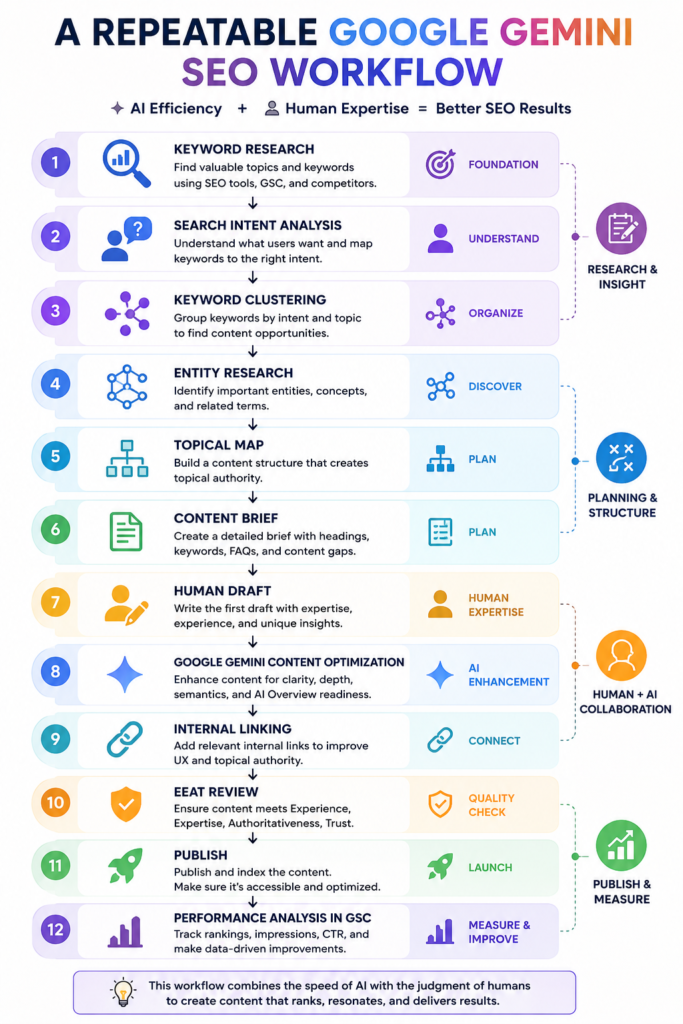
Quick Win: A Repeatable Google Gemini SEO Workflow
Google Gemini vs ChatGPT vs Claude vs Perplexity: Which AI Tool is Best for SEO?
One question SEO professionals ask frequently is:
“Which AI tool should I use?”
The answer isn’t choosing one tool but it’s understanding which tool is best for a specific task. Each AI assistant has different strengths, and the most productive SEO teams combine them into one workflow.
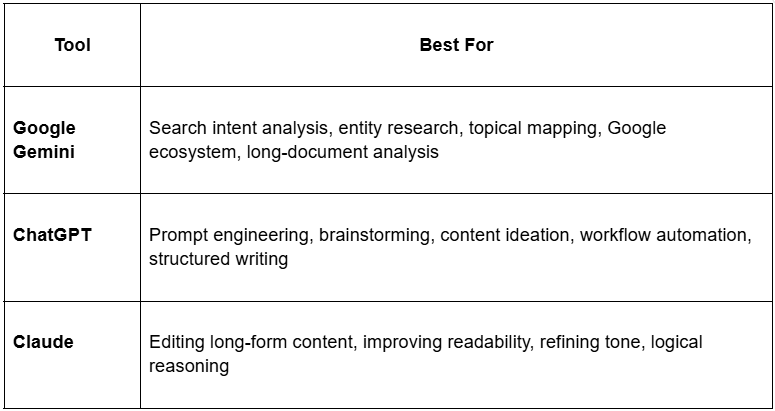
For example, a typical workflow might look like this:
- Research recent trends using Perplexity
- Build an SEO brief with Google Gemini
- Create the first draft using ChatGPT
- Refine the article with Claude
- Validate performance using Google Search Console and Google Analytics
The goal isn’t to replace one tool with another. It’s to use each one where it performs best.
Learn AI-Powered SEO Through Real Projects
Reading about AI tools is helpful. Using them on real SEO projects is what builds confidence.
At SkillUpLemon, students learn these workflows through an AI-Powered Digital Marketing Course designed around practical implementation rather than theory. Instead of only learning SEO concepts, students work on live projects, create content briefs, build topical maps, optimize pages using modern Google AI tools, and understand how AI fits into a complete SEO workflow.
The program also covers SEO, Google Ads and Meta Ads, Google Analytics, Content Marketing, Marketing Automation, Prompt Engineering, and AI-assisted content creation. Along with technical skills, students receive resume guidance, interview preparation, mock interviews, and placement support to prepare for real-world digital marketing roles. As AI continues to reshape search, understanding how to use Google Gemini for SEO and other AI SEO tools is becoming an essential skill for marketers, content creators, and business owners alike.
Conclusion
SEO is evolving faster than ever. Success is no longer about publishing more content or repeating keywords. Modern search rewards websites that understand search intent, build topical authority, demonstrate EEAT, and provide genuinely helpful answers.
That’s why Google Gemini 3 for SEO is becoming an important part of modern content strategies. It can speed up research, simplify planning, improve content optimization, and strengthen your SEO workflow but it works best alongside human expertise and trusted SEO data.
The marketers who will succeed in 2026 won’t be those who rely entirely on AI. They’ll be the ones who combine Google AI tools, strategic thinking, and real experience to create content that’s valuable for both users and AI-powered search engines.
Experiment with different workflows, refine your Google Gemini SEO prompts, and keep learning. That’s how you’ll build an SEO strategy that performs across Google Search, AI Overviews, and the next generation of AI search.
Frequently Asked Questions
1. Is Google Gemini better than ChatGPT for SEO?
Neither tool is universally better. Google Gemini 3 for SEO is excellent for search intent analysis, entity research, topical mapping, and working with long documents. ChatGPT is often preferred for brainstorming, prompt engineering, workflow automation, and structured writing. Many SEO professionals use both together.
2. How do SEO professionals use Google Gemini for SEO?
Most marketers use Google Gemini for keyword clustering, search intent analysis, content briefs, topical maps, semantic keyword research, entity discovery, FAQ generation, competitor analysis, and Google Gemini content optimization.
3. Can Google Gemini perform keyword research?
Yes, but only partially.
Google Gemini for keyword research is useful for organizing keywords, clustering them by intent, and identifying topical relationships. For search volume, keyword difficulty, and competition data, you’ll still need tools like Google Search Console, Ahrefs, or Semrush.
4. Can Google Gemini replace Ahrefs or Semrush?
No, but Gemini complements traditional SEO platforms rather than replacing them. Tools like Ahrefs and Semrush provide keyword data, backlink analysis, technical audits, and rank tracking, while Gemini helps interpret that data and turn it into actionable SEO strategies.
5. Which SEO tasks should never be fully automated?
Critical tasks such as SEO strategy, fact-checking, EEAT reviews, technical audits, backlink decisions, and publishing should always involve human expertise.
6. What are the best Google Gemini SEO prompts?
The best prompts are specific and role-based. Instead of asking Gemini to “write an SEO article,” ask it to analyze search intent, identify content gaps, recommend entities, build topical maps, or create detailed SEO content briefs.
7. Does Google Gemini help optimize content for AI Overviews?
Yes, Gemini can structure answer-first content, improve heading hierarchy, identify follow-up questions, and create concise explanations that align with how Google AI Overviews summarize information.
8. Does Google Gemini improve topical authority?
Indirectly, yes. It helps identify related topics, supporting articles, entities, and internal linking opportunities that strengthen topical authority over time.
9. Is Google Gemini accurate for content optimization?
Gemini is highly effective for improving readability, structure, semantic coverage, and organization. However, factual claims, statistics, and current SEO data should always be verified using reliable sources and dedicated SEO tools.
10. Can beginners use Google Gemini for SEO?
Absolutely, beginners can use Gemini to understand SEO concepts, build content outlines, practice prompt engineering, improve existing content, and learn modern SEO workflows. As experience grows, it becomes an even more valuable productivity tool.
Key Takeaways
If you remember only a few things from this guide, remember these:
- Google Gemini 3 for SEO is a productivity tool not a replacement for SEO expertise.
- Focus on search intent and topical authority before creating content.
- Use Google Gemini SEO prompts to improve research, planning, and optimization rather than generating complete articles.
- Validate AI-generated recommendations with real data from Google Search Console, Google Analytics, Ahrefs, or Semrush.
- Combine Google AI tools with human expertise to build content that performs across Google Search, AI Overviews, and AI-powered search experiences.
👉 If you’re learning AI-powered SEO to advance your career, don’t miss our guide on Digital Marketing Interview Questions for Freshers (2026) to prepare for the most common SEO, PPC, and AI-related interview questions.
👉 Follow SkillUpLemon on LinkedIn and Instagram for the latest Digital Marketing insights, interview tips, AI trends, career updates, and practical learning resources.